
The Growing Demand for Sustainable Laboratory Consumables
In today’s laboratory environments, the expectations placed on scientists and healthcare professionals are evolving rapidly. Precision, reproducibility and compliance remain fundamental, but there is now an equally important focus on sustainability. As laboratories reassess their environmental impact, attention is increasingly turning to everyday consumables — particularly pipette tips — and the materials used in their design.
Understanding PFAS
One of the most pressing concerns in this space is the use of per- and polyfluoroalkyl substances (PFAS). Commonly referred to as “forever chemicals”, PFAS are known for their persistence in the environment and resistance to degradation. As global regulatory

scrutiny intensifies, laboratories are seeking alternatives that align with sustainability goals while maintaining the high standards required for scientific work. The development of pipette tips with no intentionally added PFAS represents a meaningful step forward, supporting more responsible product design without compromising laboratory performance.
Maintaining Precision and Performance in Critical Workflows
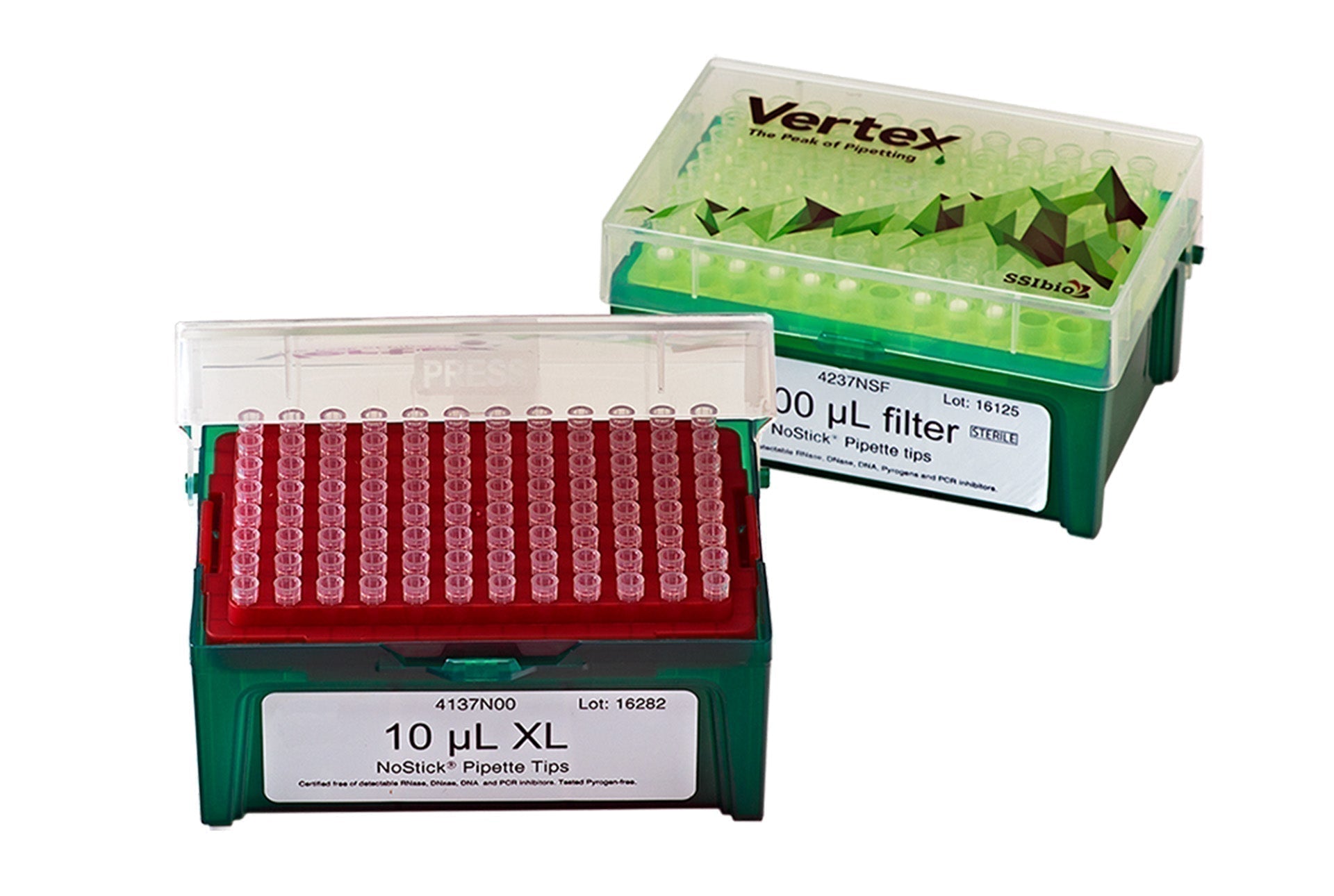
The challenge, however, lies in ensuring that sustainability does not come at the expense of accuracy or efficiency. In many laboratory workflows, particularly in clinical diagnostics, molecular biology and pharmaceutical research, even the smallest variation in liquid handling can affect results. Advances in pipette tip engineering have demonstrated that this trade-off is no longer necessary. Modern designs, such as those developed by SSIbio, utilise proprietary resin technologies to achieve exceptionally low retention and consistent liquid release. This enables researchers to dispense samples cleanly and completely, reducing sample loss and improving reproducibility across experiments.
Improving Efficiency in High-Throughput Environments
The importance of precise liquid handling extends beyond accuracy alone. Time efficiency is a critical factor in high-throughput and clinical environments, where delays can impact productivity and outcomes. Pipette tips engineered with finely tapered ends and advanced surface properties allow for smoother dispensing, eliminating the need to wait for residual droplets or perform additional handling steps. This not only streamlines workflows but also reduces the risk of variability introduced through manual intervention.

Reducing Environmental Impact Through Smarter Design
Sustainability in laboratory settings is not limited to chemical composition; it also encompasses packaging, waste reduction and overall product lifecycle. Innovative refill systems, such as EcoPac®, have been designed to significantly reduce plastic waste while maintaining convenience and sterility. By minimising the volume of disposable materials and offering recyclable packaging options, these systems help laboratories lower their environmental footprint without disrupting established processes. In high-volume environments, such improvements can contribute to substantial reductions in waste generation over time.
Ensuring Quality, Purity and Compliance
Equally important is the assurance of product quality and purity. For scientists working in sensitive applications, contamination control is paramount. High-quality pipette tips are manufactured from medical-grade virgin polypropylene and produced in controlled cleanroom environments to ensure consistency and reliability. They are rigorously tested to be free from RNase, DNase, DNA and PCR inhibitors, with sterile and filtered options available for applications where sample integrity is critical. These characteristics reinforce confidence in experimental outcomes while meeting the stringent requirements of modern laboratories.
A Future-Focused Approach to Laboratory Science
As the life sciences industry continues to prioritise sustainability, the shift towards PFAS-free laboratory consumables reflects a broader transformation in how products are designed and evaluated. Laboratories are no longer willing to compromise between environmental responsibility and scientific excellence. Instead, the focus is on solutions that deliver both, enabling researchers to meet regulatory expectations, reduce environmental impact and maintain the highest levels of performance.
The adoption of PFAS-free pipette tips is more than a product choice; it represents a commitment to responsible science. By integrating sustainability into everyday laboratory practices, organisations can support long-term environmental goals while continuing to produce accurate, reliable and high-quality results.

