
How Automation-Ready Media and Stabilisation Technologies Are Supporting Faster, Safer and More Reliable Laboratory Outcomes
Australia’s healthcare system is facing increasing pressure from antimicrobial resistance (AMR), healthcare-associated infections (HAIs), respiratory disease outbreaks and emerging fungal pathogens such as Candida auris. As clinical microbiology laboratories manage rising specimen volumes alongside expectations for faster turnaround times, the focus is shifting toward technologies that improve specimen integrity, biosafety, workflow automation and diagnostic accuracy.
Modern microbiology is no longer centred solely on analytical instrumentation. Increasingly, laboratories are recognising that pre-analytical optimisation — including sample collection, transport, enrichment and preservation — has a direct impact on downstream molecular and culture-based diagnostics.
This shift is particularly relevant in Australia, where geographically dispersed healthcare networks, variable transport times and increasing demand for molecular testing place pressure on specimen stability and laboratory efficiency.
Why Pre-Analytical Optimisation Matters in Modern Microbiology
The quality of a microbiology result is heavily dependent on the quality of the specimen received. Poor preservation, degradation of nucleic acids, contamination or delayed processing can reduce diagnostic sensitivity and contribute to repeat testing, delayed treatment decisions and increased laboratory workload.
Australian healthcare systems continue to see significant impacts from hospital-acquired infections and resistant organisms:
- The Australian Institute of Health and Welfare reported more than 150,000 hospitalisations involving at least one hospital-acquired complication.
- Public hospitals in Australia recorded 1,749 cases of Staphylococcus aureus bloodstream infections during 2024–25.
- Australia dispensed more than 23 million antibiotic prescriptions in 2024, while reports of critical antimicrobial resistance increased by over 25%.
- Respiratory infections and resistant bloodstream infections remain among the leading contributors to AMR-associated mortality and healthcare costs in Australia.
For microbiology laboratories, these trends reinforce the need for diagnostic workflows that support:
- Faster and more accurate pathogen recovery
- Improved molecular detection sensitivity
- Enhanced biosafety during transport and handling
- Standardisation across multi-site laboratory networks
- Compatibility with laboratory automation systems
- Reliable performance despite transport delays
Supporting Molecular Diagnostics with Guanidine-Free Sample Stabilisation
Molecular microbiology continues to expand rapidly across Australian pathology services. PCR and syndromic molecular testing are now routine for respiratory viruses, gastrointestinal pathogens, sexually transmitted infections and antimicrobial resistance surveillance.
However, molecular workflows remain highly dependent on nucleic acid integrity.
Traditional transport media can present challenges for laboratories, particularly when specimens experience extended transport times or require safe handling before processing. There is growing interest in transport media that can simultaneously:
- Inactivate pathogens
- Preserve RNA and DNA integrity
- Support room-temperature stability
- Maintain compatibility with molecular platforms
One emerging approach is the use of guanidine-free molecular transport media designed for pathogen inactivation while preserving nucleic acids for downstream testing.
Copan's UBM™ is an example of this next-generation specimen management approach. According to the product data, the medium is designed to:
- Inactivate viruses, bacteria and yeasts
- Preserve DNA and RNA integrity
- Provide specimen stability at room temperature for up to 28 days
- Avoid the use of guanidine salts
- Maintain compatibility with molecular diagnostic platforms
The data provided also demonstrated greater than a 3-log reduction in viral viability after 10 minutes of incubation, while maintaining stable Ct values across multiple testing conditions and molecular platforms.
For Australian laboratories servicing regional and remote healthcare settings, room-temperature stability can be particularly valuable. Extended specimen stability may reduce cold-chain dependency and support more consistent molecular results when transport times are prolonged.
In high-throughput molecular laboratories, pathogen inactivation prior to processing may also support improved laboratory biosafety practices and safer specimen handling.
The Growing Need for Selective Enrichment in Clinical Microbiology
Culture-based microbiology remains essential for antimicrobial susceptibility testing, outbreak investigations, infection control and confirmation of molecular findings.
However, recovering clinically significant organisms from complex samples can be challenging when pathogen loads are low or commensal flora are abundant.
Selective enrichment broths continue to play a critical role in:
- Increasing pathogen recovery
- Enhancing detection sensitivity
- Reducing false negatives
- Supporting antimicrobial stewardship initiatives
- Improving workflow consistency in automated laboratories
Australian laboratories are increasingly balancing the need for culture sensitivity with pressure to improve efficiency and automation compatibility.
Automation-Ready Broths for Diverse Clinical Applications
The evolution of liquid-based microbiology workflows is supporting greater standardisation across microbiology laboratories.
Automation-compatible enrichment broths are becoming particularly valuable in laboratories implementing total laboratory automation (TLA) systems or automated specimen processors.
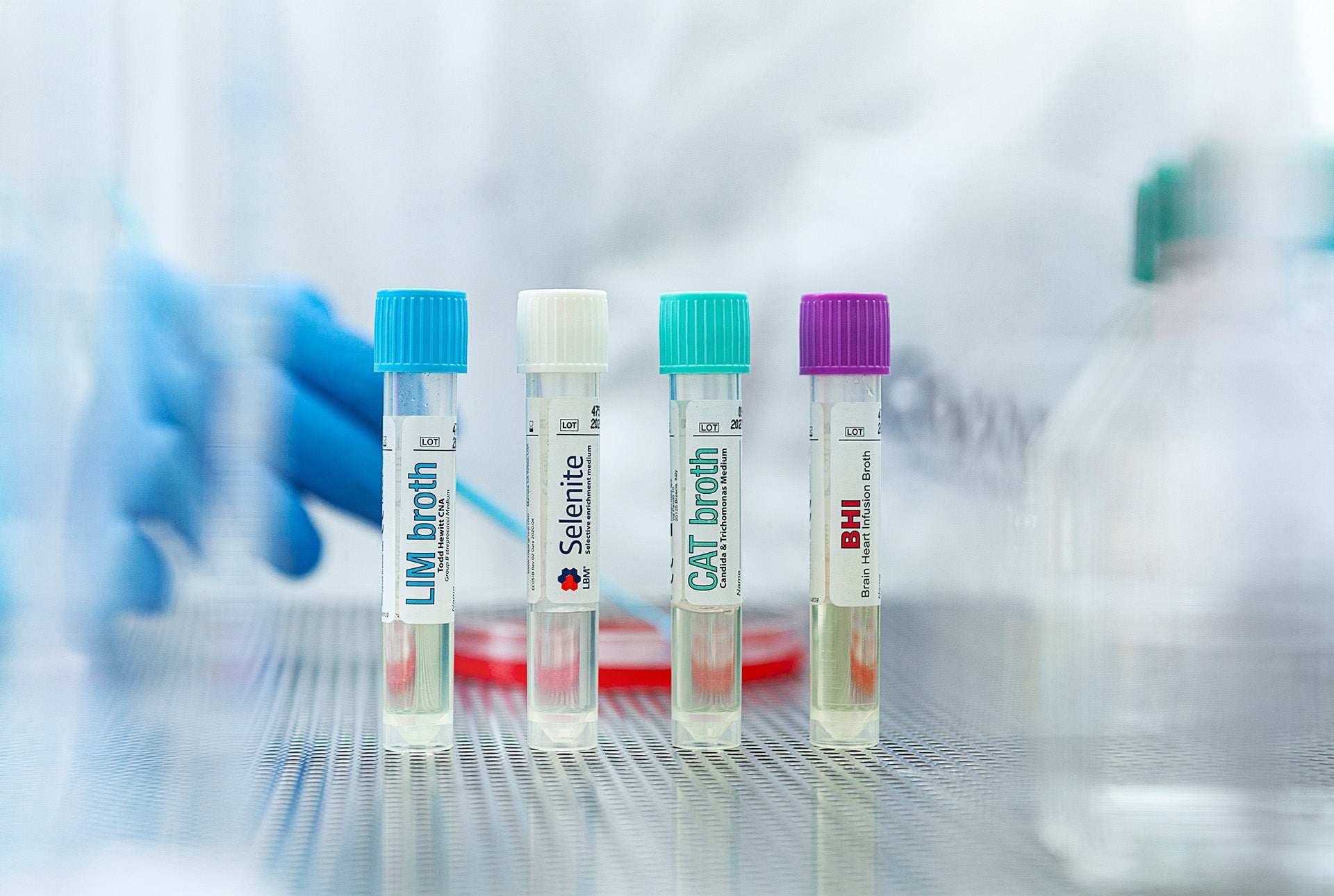
Copan's LBM® broth portfolio has been developed to support a wide range of microbiology applications including:
- Respiratory disease diagnostics
- Gastrointestinal pathogen detection
- Women’s health testing, including Group B Streptococcus (GBS)
- Antimicrobial resistance screening
- Hospital-acquired infection investigations
According to the product information, these broths are designed with several operational advantages in mind:
- Ready-to-use formats requiring no preparation
- Room-temperature stability
- Standardised tube formats compatible with automated systems
- Compatibility with WASP® laboratory automation workflows
- Compliance with IVDR and ISO quality standards
Importantly, enrichment media continue to provide diagnostic value even in highly molecular laboratories.
For example:
- BHI Broth™ supports the recovery of fastidious organisms including Streptococcus pneumoniae and Staphylococcus aureus
- Selenite Broth™ supports selective enrichment of Salmonella enterica and Shigella sonnei
- LIM Broth™ supports Group B Streptococcus enrichment for maternal screening workflows
- TSB Salt Enrichment Broth™ supports MRSA screening applications
The use of standardised enrichment workflows can help laboratories improve reproducibility while reducing manual preparation time and variability.
Addressing Emerging Threats: Candida auris Surveillance and Detection
One of the most significant emerging infection-control challenges globally is Candida auris.
This multidrug-resistant fungal pathogen has become a growing concern due to its:
- Ability to persist in healthcare environments
- Resistance to multiple antifungal agents
- Association with healthcare-associated outbreaks
- Potential for misidentification using conventional methods
The World Health Organisation has classified Candida auris as a critical priority fungal pathogen.
For Australian healthcare facilities, early identification and effective surveillance remain essential to preventing transmission.
Selective enrichment technologies are increasingly important because C. auris may be present in low abundance within mixed microbial populations.
Copan's CABroth™ has been developed as a selective enrichment broth specifically designed for Candida auris recovery.
According to the technical data provided, the broth is designed to:
- Selectively enrich Candida auris
- Inhibit competing Candida species and commensal bacteria
- Support culture and molecular detection workflows
- Operate in automation-compatible laboratory systems
- Deliver enrichment within 48 hours
The product information also highlights compatibility with automated laboratory systems including the Copan WASP® and WASPLab® workflows.
In laboratories managing high specimen volumes, automated enrichment and selective recovery may help reduce the risk of missed positive cases while supporting infection prevention and control initiatives.
Automation and Standardisation Are Becoming Essential
Australian pathology laboratories continue to face workforce shortages, increasing testing demand and pressure to improve turnaround times.
As a result, many laboratories are investing in automation strategies that reduce manual handling while improving reproducibility.
Pre-analytical and enrichment products designed specifically for automation can support:
- Reduced manual workflow steps
- Improved traceability
- Standardised inoculation and enrichment processes
- Enhanced throughput capacity
- Lower risk of transcription or handling errors
- More consistent diagnostic outcomes
Importantly, automation-ready consumables and enrichment systems may help laboratories scale molecular and culture workflows without compromising quality.
Integrating Molecular and Culture-Based Diagnostics
The future of microbiology diagnostics is increasingly hybrid.
While molecular diagnostics deliver rapid turnaround times and high analytical sensitivity, culture remains essential for:
- Antimicrobial susceptibility testing
- Epidemiological surveillance
- Infection control investigations
- Confirmation of molecular findings
- Outbreak management
Technologies that support both molecular and culture-based pathways are likely to become increasingly important in modern microbiology.
Sample preservation media that maintain nucleic acid integrity while inactivating pathogens, combined with selective enrichment systems that improve organism recovery, may help laboratories optimise both speed and diagnostic confidence.
The Australian Laboratory Perspective
Australia’s unique healthcare geography creates additional challenges for microbiology diagnostics.
Regional transport delays, variable specimen transit conditions and centralised pathology services mean that specimen preservation and workflow standardisation are especially important.
Solutions that support:
- Extended room-temperature stability
- Reduced cold-chain dependency
- Automation compatibility
- Faster pathogen recovery
- Improved molecular detection reliability
may provide measurable operational benefits for Australian laboratories.
As microbiology evolves toward integrated molecular and culture workflows, laboratories are increasingly prioritising technologies that improve pre-analytical quality, reduce variability and support scalable automation.
Final Thoughts
Clinical microbiology is undergoing rapid transformation.
The convergence of molecular diagnostics, selective enrichment technologies and laboratory automation is reshaping how Australian laboratories approach pathogen detection, infection prevention and antimicrobial stewardship.
While instrumentation often receives the most attention, the pre-analytical phase remains one of the most influential components of diagnostic quality.
Technologies such as automation-compatible enrichment broths, selective fungal enrichment systems and molecular stabilisation media are helping laboratories improve workflow efficiency, specimen integrity, biosafety and diagnostic confidence.
As the burden of antimicrobial resistance, respiratory disease and healthcare-associated infections continues to rise, investments in modern microbiology workflows will remain critical for supporting timely and accurate patient care.

Sources
-
Australian Institute of Health and Welfare (AIHW) – Hospital Safety and Quality Data
-
Australian CDC – Sixth Australian Report on Antimicrobial Use and Resistance in Human Health (AURA)
-
Australian Commission on Safety and Quality in Health Care – CARAlert Surveillance Program
-
Wozniak TM et al. Disease burden, associated mortality and economic impact of antimicrobial resistance in Australia.
-
Australian Health Review – AMR mortality and surveillance analysis
-
Burden of healthcare-associated infections in Australia – Antimicrobial Resistance & Infection Control Journal